Morning Masterclasses
8:30 a.m.-12:00 p.m.
Description
Many people are afraid that machines and AI will replace them, while others are overconfident, believing that machines will never replace human professionals. The reality is that AI is advancing rapidly, and many experts agree that we are entering a transformational era—one where professionals who do not learn to use AI will be replaced by those who do. Over the past few decades, the focus has rightly been on developing emotional intelligence (EQ) and cultural intelligence (CQ) to better understand human emotions and cross-cultural dynamics. However, as we enter the age of artificial intelligence, the next frontier in human evolution will be defined by Creative Intelligence (CrQ)—the ability to imagine, innovate, and adapt in ways machines cannot. In a world increasingly shaped by algorithms, it is our uniquely human creativity that will set us apart.
AI (machine learning) is programmed by humans to imitate human-like intelligence, but it lacks the essence of true creativity—the ability to imagine, intuit, and create with human-driven purpose. That’s why Creative Intelligence has emerged as a core competency for navigating complexity, solving problems, understanding the broader context, and communicating ideas that drive meaningful innovation. It encompasses qualities such as Big Picture Thinking—essential in a world shaped by global forces—and Open-Mindedness, which helps us break free from limiting assumptions. Thinking outside the box is not just a cliché but a necessary mindset for envisioning new solutions and shaping a better future in a rapidly changing world.
In today’s AI-augmented workplace, we also need Creative Intelligence—the ability to transform human experiences, emotions, intuition, and insights into tangible, creative action-oriented, and innovative solutions. A human-centered approach to AI means that we lead AI, rather than being led by it. Creativity is no longer just a skill for weekend hobbies or the domain of a few innovation geniuses—it is a crucial core human competency. Whether you're a lawyer, manager, policy analyst, healthcare professional, engineer, or entrepreneur, you need more than just technical skills to thrive. You need Creative Intelligence—a blend of creativity, problem-solving, communication, negotiation, leadership and intuition.
Generative AI is not just a tool—it’s your new creative partner. But to lead with it effectively, you must first understand the one thing AI cannot replicate: the human creative process rooted in emotion, intuition, and purpose.
This creativity course is not for artists or designers—it’s tailored for the professional world, because Creative Intelligence is the next essential skill every professional needs. Whether you work in public service, private sector, law, healthcare, education, or tech, creativity is no longer optional—it is a core competency for navigating complexity, solving problems, and communicating ideas for innovation. AI is accelerating this shift, enabling everyone to be more creative—but only if we understand the essence of the human creative process—how it is sensed, felt, integrated, and manifested.
In this hands-on course, Gaia Orion (architect-artist) and Garrick Apollon (lawyer-filmmaker) introduce the core principles of creative intelligence. The day begins with guided creative exercises led by Gaia and Garrick to awaken your artistic instincts and deepen your understanding of the human creative process. These are then paired with practical activities using generative AI tools such as ChatGPT and DALL·E, allowing you to explore how human creativity and machine intelligence can work together to generate innovative ideas and solutions. You’ll explore how to bring your professional ideas to life using both your guts, heart and brain—because while machines can process data, only humans can lead with empathy, emotion, and ethical insight.
This course challenges the myth that creativity is a luxury or a personality trait. It shows you that creative intelligence—your ability to imagine, express, and problem-solve—is a professional survival skill in the age of AI.
No technical background or artistic inclination required—just curiosity about the age of AI and a willingness to reimagine your work.
Learning Outcomes
By the end of the day, participants will be able to:
- Understand and apply the key principles of Creative Intelligence as foundational tools for success in any professional role.
- Master the art of crafting powerful prompts that unlock generative AI’s creative and problem-solving potential.
- Use generative AI tools to ideate, visualize, and prototype ideas, solutions, and professional content.
- Integrate human intuition, emotion, purpose, and strategy into workflows that blend human and machine creativity.
- Navigate ethical considerations and lead responsible, human-centered AI initiatives in the workplace.
- Walk away with tangible AI-enhanced practical skills—drafts, presentations, prototypes, visuals, or narratives—you can use in your field.
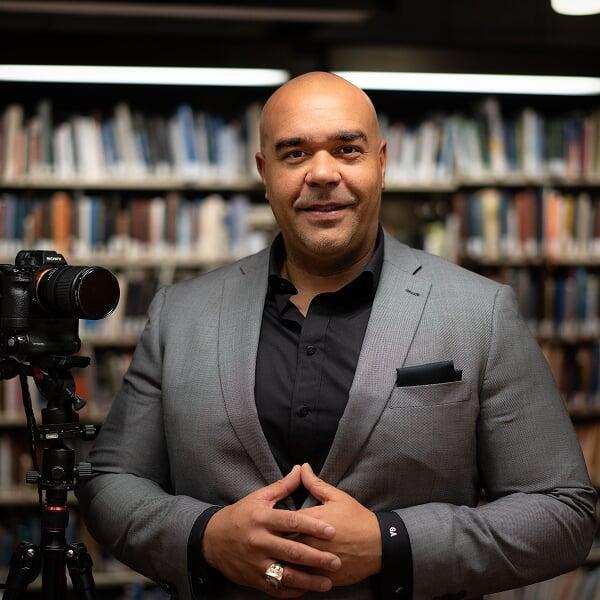
Garrick Apollon
Garrick Apollon is the Director of Entrepreneurship and Innovation at the University of Ottawa’s Faculty of Law, Common Law Section. He leads the faculty’s entrepreneurship coordination and strategy, including its course stream and legal clinics. He teaches an intensive leadership seminar titled Entrepreneurship & Innovation Mindset for Lawyers and serves as the founding-director of the Entrepreneurship and Innovation Legal Clinic, which he established in partnership with Futurpreneur Canadanorth_eastexternal link, the country’s largest incubator for young entrepreneurs. The clinic provides legal support to underrepresented entrepreneurs, including Indigenous, Black, and social entrepreneurs.
Garrick actively supports the broader innovation ecosystem through engagement with the University of Ottawa’s eHub and Kanata North campus, located at Canada’s largest technology park.
A practicing corporate lawyer since 2004 (Law Society of Ontario), he specializes in business law and legal risk management. Garrick Apollon is also a passionate lawyer-entrepreneur and the founder-owner of CPE Studios- a company specializing in research and the production of documentary films and e-learning content for legal and business professionals.
An educator for over 20 years, Garrick has taught international business, organizational behaviour, negotiation, corporate governance, and ethics at the University of Ottawa’s Telfer School of Management (BCom, MBA, and EMBA programs). He holds an LL.B. (civil law) from Université Laval, a Juris Doctor (JD) from the University of Ottawa, and two master’s degrees in law: an LL.M. in International Business Law from Université Laval and an LLCM in Comparative Law from the University of Pennsylvania Carey Law School. As a legal scholar, he has published ten peer-reviewed articles on topics such as legal ethics and corporate governance, negotiation, legal risk management, and visual legal advocacy.

Gaia Orion
Gaia Orion is a Paris-born, visionary artist with a successful international career. She graduated as an architect (with honors from École des Beaux-Arts in Paris), has certifications as a Creativity Coach (CCA) and a Corporate Coach (WABC). As an advocate for art as a force for global awakening, she bridges the realms of artistic expression, mentorship, and conscious leadership.
Her career spans solo and group shows across four continents: She has exhibited in Paris, New York, San Francisco, Toronto and Moscow; as well as in Mexico, Columbia, Spain, Germany, Hungary and Bali.
Her art has been featured in over 100 publications with 25 cover pages. Noteworthy media are Woman of Influence (Canada), Yoga Magazine (U.K.), Artension and Féminin Bio (France), and Professional Artist Magazine (USA).
A passionate educator, she has designed courses for the Orillia Museum of Art & History, Fleming College, the Professional Development Institute from the University of Ottawa and the Academy of Personal development in France.
Since 2016, she has facilitated creativity workshops for corporations and nonprofits, empowering teams to harness innovation and to bond around creativity practices.
Gaia’s commitment to global conscious change is equally significant. She is a member of the Wisdom Council of Global Alliance for Transformational Entertainment (Los Angeles), she is on the steering council of the Association of Transformational Leaders and has curated art sections for conferences like the Integral European Conferences (Hungary) and the Toronto Mindful Conferences.
Her exhibitions have been endorsed by thought leaders such as Elizabeth May, Barbara Max Hubbard, Peter Levine, Susun Weed or Academy Award Actress Juliette Binoche. In France, she was featured in two books and a documentary Walking toward a New World, (Un nouveau monde en marche, 2012) and Becoming pioneers of the new world (Devenez pionniers du nouveau monde, 2021) along with 50 influential French change leaders.
Recognized with grants from the Ontario Arts Council and awards like the Healing Power of Art from Manhattan Arts International (2012–2019), favorably reviewed by New York art critic Jill Conner, Gaia continues to inspire through her paintings, coaching, and collaborations—proving that art is not only a mirror of society but a catalyst for its evolution

Description
This course is designed to equip project management professionals with the skills and tools necessary to increase IT project success. The course draws on over 20 years of Government of Canada audit findings. It offers a case-study approach, based on key auditor findings, and participants apply real-world solutions to known project management challenges.
Participants delve into auditors’ key findings, learn how to avoid common pitfalls, and discover opportunities to deliver on time, in budget and within project scope. Extensive in-class discussions and both individual and team practical tasks all enhance participant learning.
This course offers a unique and practical learning experience that will elevate your project management skills.
- Manage an IT investment portfolio
- Establish project governance/leadership and accountability structures
- Identify business considerations and improve project planning
- Incorporate stakeholder management, communication strategies, and procurement planning
- Identify risks and mitigation strategies
- Develop strong project management oversight, including project gating process to enable informed decision making
- Use service level agreements to improve client services

Daniel Wong, BSc, MBA
Daniel Wong, BSc, MBA, has specialized in IM/IT for more than 30 years, in both the private and public sectors (municipal and federal) and has consulted in the not-for-profit and charitable organizations. He draws on his executive level experience in program delivery, people development, financial management and inter-ministerial partnerships.
Daniel is recognized as a seasoned project manager (PMP) and scrum master (PSM I) where he has led various cross functional teams to deliver complex IT projects, service renewal initiatives and business transformation in a large-scale operational and multi-client organization. Moreover, he has noteworthy experience in adult education, internal audit, environmental data analysis and coaching in lean six sigma (Black Belt), performance management and strategic thinking.
Daniel is particularly effective in building partnerships with business and IT communities.
Description
Digital transformations (e.g., ERP modernization, cloud migrations, data platforms, automation, and AI/ML enablement) are moving faster than traditional assurance approaches can keep up with. The risk is not only technical failure, but also weak governance, unclear accountability, poor data quality, control gaps across the Software Development Life Cycle (SDLC), and decisions being made without reliable evidence.
This session equips assurance, audit, and risk professionals with a practical approach for using AI/ML to strengthen assurance while maintaining independence and professional judgment. Participants will learn how to apply a trust-and-controls mindset across the transformation lifecycle (from business case and design through build, testing, go-live, and steady-state operations) using a structured trust framework and risk-based audit planning that covers both technical and non-technical elements (governance, privacy, security, transparency, and operational fit-for-use).
A key theme is that AI/ML can be an accelerator for assurance (planning, analysis, and reporting), but it must be used responsibly, with clear boundaries, traceability of evidence, and controls over the AI-enabled workflow itself.
- Explain where assurance fails most often in digital transformations (ERP/cloud/data/automation/AI/ML) and what “good” looks like at a practical level.
- Map transformation phases to assurance focus areas using a simple lifecycle view (initiation → delivery → go-live → operations).
- Apply a lightweight “AI-enabled assurance checklist” (trust + governance + controls) to confirm coverage and identify the top gaps quickly.
- Understand where generative AI/ML adds value (and where it must be constrained) in assurance, using it to draft audit artifacts (questions, criteria, and test steps) while maintaining privacy, evidence integrity, traceability, and independence.
- Develop a draft mini-deliverable during class: either (a) a one-page assurance plan (starter template), or (b) a prioritized set of risks/controls with high-level testing considerations for a selected transformation scenario.
- Communicate results in an executive-ready structure (what matters, why it matters, evidence needed, and the decision/action).

Hassan (Hash) Qureshi
Hassan (Hash) Qureshi (CPA, CMA, CIA, CISA, CRMA, CRISC, CISSP, CGEIT, CDPSE, P.Eng.) is a Partner within MNP’s Enterprise Risk Services practice. He brings 25+ years of experience spanning strategic planning, risk management, information security, enterprise architecture, corporate governance, and a wide range of assurance and internal audit engagements, bridging highly technical environments with business and executive decision-making.
Hash has led multidisciplinary teams of accountants, IT security specialists, engineers, and finance professionals and has supported clients across public and private sectors on complex technology and transformation initiatives. He is experienced briefing boards, audit committees, and executives and facilitating senior-level workshops on risk, controls, and governance.
Hash is also an active thought leader and speaker on audit, risk, privacy, and emerging technologies, including delivering sessions on auditing AI/ML and applying trust frameworks to establish assurance over modern digital capabilities.

Description
This interactive workshop introduces a strategic, hands-on approach to designing and deploying AI agents as integral members of tomorrow’s workforce. Participants will explore how agent-based AI can enhance collaboration, adaptability, and innovation across dynamic organizational environments — moving from theory to practical application in real time.
What to Expect:
- Hands-On Design Experience: A gamified, team-based format where participants build AI “workers” using modular blocks and cards — combining friendly competition with collaborative problem-solving.
- Critical & Strategic Thinking: Participants will challenge and stress-test AI use cases through role-based lenses (Ethics, Governance, Human Impact, ROI, and more), ensuring thoughtful, responsible, and value-driven implementation

Simon Love, Director, Workforce Transformation
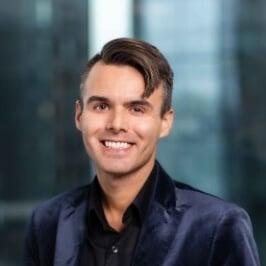
Eric Beaudoin, Partner, Workforce Transformation

Stefanie Couture, Partner, Workforce Transformation

Genevieve Roch, Manager, Workforce Transformation

Andie Shields, Manager, Workforce Transformation
She brings 8+ years of experience leading transformation projects and championing digitally-enabled experience across the employee lifecycle.

Nikki Thompson, Senior Associate, Workforce Transformation
Nikki brings 5+ years of change management experience across various sectors.

Ravikiran Lakshmanan, Senior Associate, Workforce Transformation
Ravi brings in 10+ years of experience in HR Digitization and HCM implementation globally.

Afternoon Masterclasses
1:00 p.m.-4:30 p.m.
Description
This course provides procurement professionals with the tools and insight to identify, assess, and reduce procurement-related “noise” in the acquisition of professional services. Procurement noise refers to ambiguity, inefficiencies, miscommunication, and compliance gaps that arise throughout the procurement lifecycle, often leading to audit findings, procurement delays, or reputational risks.
Professional services procurement—covering everything from consulting and training to IT support and legal services—poses unique challenges due to the subjective nature of evaluating services, drafting precise statements of work, and ensuring defendable evaluation criteria. This course explores these challenges through the lens of procurement integrity, compliance obligations, and strategic oversight.
Participants will gain a deep understanding of how federal procurement frameworks are currently applied, where oversight mechanisms may fall short, and how noise can arise from unclear documentation, inconsistent evaluation practices, or weak contract management. You will learn how to map common sources of noise and vulnerability, implement preventative strategies, and improve pre-audit and compliance assessment readiness.
Through case studies, audit findings, and real-world examples, you will be guided through the steps of conducting a procurement vulnerability assessment and developing a risk mitigation plan. You will also explore government-wide oversight tools, how to align your procurement activities with best practices, and how to communicate procurement risks and gaps to decision-makers.
Whether you oversee procurement teams or are directly involved in acquiring professional services, this course will help you build stronger, more transparent, and compliant procurement processes—while reducing organizational exposure and inefficiencies.
Learning Outcomes
At the end of this course, participants will be able to:
- Identify sources of procurement-related noise in professional services acquisitions
- Evaluate compliance vulnerabilities within the federal procurement context
- Conduct readiness assessments for compliance audits and oversight reviews
- Interpret existing federal oversight practices and pinpoint systemic gaps
- Apply best practices to improve transparency and reduce ambiguity in professional services procurement
- Recommend targeted strategies to minimize procurement risks and strengthen accountability

Martin Chénier
Martin Chénier is a respected public procurement strategist and the President & Founder of the Procurement Alliance of Canada, a subscription-based advisory and learning platform for procurement professionals across the public sector and industry. With over two decades of experience helping organizations — including federal government clients — buy and sell professional services, Martin is passionate about improving the procurement experience for buyers and suppliers alike. Known for his practical insights and customer-centric approach, he supports public-sector teams with advisory services, coaching, and training, and is an active contributor to industry committees and working groups. Prior to founding the Alliance, Martin served two terms as National Chair of Government Relations for the Industry Association of Staffing Services and has been recognized with awards for leadership and service excellence.

Description and Learning Outcomes:
At the end of this course, participants will be able to:
- Diagnose organizational, technical, and ethical barriers to responsible AI.
- Apply the 3H and ETHIC frameworks to design enabling conditions for responsible AI.
- Use agile and change management practices to deliver and adopt AI safely.
- Operationalize governance with publicly available tools and standards.
- Embed ethical, inclusive, and transparent practices throughout the AI lifecycle.

Noha Rahal, PhD
Acting Director, Digital Transformation Service Sector, Innovation, Science and Economic Development Canada
Noha Rahal is a recognized leader in digital transformation and inclusive design within the Canadian federal public service. With a PhD focused on enabling AI in government, Noha brings deep expertise in ethical AI, public sector innovation, and the development of in-house digital talent.
She has played a pivotal role in initiatives that advance human-centred digital transformation, incorporating sound change management practices and fostering a digital and agile mindset across teams. She emphasizes responsible AI adoption, ensuring that emerging technologies are deployed in ways that are transparent, equitable, and aligned with public values.
Driven by a deep passion for equity for all, Noha is actively involved in and Chairs several networks that promote inclusion and psychological safety in the workplace.
Description
As organizations across government, education, and other complex environments adopt agile ways of working and AI-enabled tools, teams face a growing challenge: how to leverage emerging technologies without losing sight of human needs, accountability, and trust.
This interactive workshop explores how Human-Centred AI can be applied in practice to strengthen agile product delivery. Drawing on perspectives from service design and AI-enabled product management, the session examines how human-centred design improves decision-making within agile teams and how AI can support, accelerate, and enhance this work without replacing human judgment.
Participants will explore where trust influences the adoption of digital products and AI, and why usability, transparency, and accountability are critical to meaningful use.
Learning Outcomes
At the end of this course, participants will be able to:
- Explain the role of human-centred design within agile product delivery
Understand how human-centred design strengthens problem framing, prioritization, and delivery inside agile teams.
Distinguish between AI ethics and governance discussions and the practical use of AI to support design and product work while maintaining accountability. - Identify where AI can support human-centred work in agile teams
Recognize concrete opportunities where AI can reduce effort, increase insight, and support sense-making across discovery and delivery. - Apply human judgement and accountability when using AI in product delivery
Assess when AI is appropriate, when human oversight must lead, and how responsibility is maintained in regulated and high-impact environments. - Understand how trust influences the adoption of digital products and AI across complex organizational environments, and how human-centred practices help build and sustain that trust
Examine how trust shapes confidence, use, and reliance on digital systems and AI-supported decisions. - Translate workshop insights into practical actions for their own teams or teaching contexts
Leave with tools, questions, and approaches that can be applied in real-world product, service, and educational settings.

Christina Leclerc
Christina Leclerc is a creative, strategic, and deeply empathetic human‑centred design leader with more than 20 years of digital design expertise across the public, private, and not‑for‑profit sectors. She specializes in bringing clarity to complexity—translating intricate concepts, systems, and processes into intuitive visuals, user‑friendly interfaces, and frictionless end‑to‑end experiences.
As a executive consultant and practitioner in Human‑Centred Design, Christina works extensively with Canadian public‑sector organizations and technology implementation teams to ensure that any technical adoption, including AI, is responsible, ethical, and grounded in real human needs. She is known for her ability to navigate the knottiest organizational challenges with a versatile toolkit spanning service design, qualitative research, and user experience.
Christina supports and mentors a talented team of creatives and service designers while contributing to the growth of Levio's human‑centred innovation. She helps public‑sector leaders integrate technology in ways that amplify human judgment, improve service delivery, and strengthen public trust—always prioritizing transparency, inclusion, and long‑term sustainability.
She holds certifications in UX Management from the Nielsen Norman Group and is a Certified Usability Analyst with Human Factors International, alongside training in Storytelling for Influence through IDEO U. These combined capabilities enable her to craft compelling narratives that connect design, strategy, and human impact.
When she’s not immersed in the world of HCD and AI, Christina can be found exploring her love of well-designed spaces and sustainable living projects.

Alessandra Smircich
Alessandra Smircich is a passionate, strategic human-centered design leader with over 20 years of experience across the public and private sectors. She has built her career around placing people at the center of complex systems, policies, and products bringing clarity, empathy, and rigor to environments shaped by competing constraints. Her work is grounded in the belief that well-designed experiences create both measurable business value and meaningful public impact.
As an Executive Consultant and Human-Centered Design practitioner, Alessandra partners with senior leaders and multidisciplinary teams on complex transformation initiatives. She is known for translating ambiguity into actionable insight, helping organizations align around real user needs through research, service design, and strategic facilitation. Her experience spans large-scale digital transformation efforts in the public sector as well as private-sector, with emerging technologies applied ethically and in service of human needs.
In her role as Co-Lead of Levio’s Human-Centered Design practice, Alessandra sets strategic direction, shapes the evolution of the practice, and drives standards of excellence across delivery and advisory work. She leads and mentors a growing team of researchers and service designers while advancing integrated approaches across design, data, technology, and policy to support people-centered decision-making at scale.
Alessandra holds professional certifications in UX Management from the Nielsen Norman Group, SAFe® Practitioner (SP), and User Experience Design, which support and strengthen her extensive experience in connecting research insights to organizational strategy and guiding evidence-based decision-making.
Outside of work, Alessandra is an avid cyclist and speed skater often spotted zooming down the canal in every season.

Description
In the rush to adopt Generative AI, most organizations have tethered their future to the public cloud. But what happens when the "Cloud" is a liability? Whether due to strict data sovereignty, air-gapped security requirements, or remote field operations, the next frontier of AI isn't in a massive data center—it’s right under your desk (or in your pocket).
This session explores the high-stakes world of Disconnected GenAI. We will strip away the reliance on constant connectivity to look at how Large Language Models (LLMs) can be compressed, quantized, and deployed locally. From defense and healthcare to maritime and underground mining, we’ll examine how to maintain cutting-edge intelligence when "airplane mode" is a permanent requirement.
Key Takeaways
- The Sovereignty Shift: Why moving away from APIs to local weights is the ultimate play for data privacy and intellectual property protection.
- Squeezing the Giant: A look at the "Shrink-Ray" tech—quantization, pruning, and distillation—that allows frontier-class models to run on edge hardware.

Andy Green
Andy Green is a seasoned Delivery Lead with over 17 years of experience delivering IT services to UK Government clients, recognized for pioneering transformation through data-centric strategies and emerging technologies. Since 2020, Andy has led initiatives that harness the power of cloud platforms, advanced analytics, and AI-driven solutions to modernize operations and enhance decision-making.
His work includes spearheading cloud migration programs, developing scalable cloud applications, and implementing secure Zero Trust architectures—all underpinned by data-driven insights.
A passionate advocate for Agile methodologies, Andy has successfully transitioned delivery models from traditional Waterfall to Agile frameworks, enabling iterative development and rapid deployment of analytics and AI capabilities. His leadership ensures teams can adapt to evolving requirements, leverage predictive insights, and deliver high-quality outcomes with greater velocity and efficiency.
In his current role, Andy is shaping strategies that combine flexibility with secure, data-enabled collaboration. He champions the adoption of intelligent tools and platforms that empower teams to work effectively in hybrid environments while maintaining robust security and compliance. Andy’s focus on accelerating the deployment and consumption of innovative technologies—including AI-powered solutions—has unlocked new opportunities for automation, advanced analytics, and improved service delivery.
Guided by his motto, “One Squad at a time,” Andy emphasizes empowering teams to harness data and AI for measurable business impact. Notably, since 2020, he has negotiated contract changes to embed Agile and data-driven practices, opening a portfolio of opportunities that align with the growing demand for analytics and intelligent automation.
Beyond his professional achievements, Andy enjoys playing the piano and exploring the UK’s waterways on his Narrowboat—finding balance between creativity, nature, and innovation.

Matt Osborne
Matt Osborne is a Cloud Architect and AI Consultant with over 20 years’ experience delivering secure digital transformation across UK Government, Defence, and regulated sectors. As a Manager and Lead Architect within the High Secure Sector at DXC Technology, he shapes cloud and GenAI strategy for high-assurance environments, advising senior stakeholders and government CTOs on the secure adoption of advanced AI capabilities.
Recognised as a DXC Technology Master in the 2025 Tech Honours Awards, Matt designs secure multi-account AWS platforms and containerised ecosystems for sensitive deployments. He contributes to the architectural strategy behind sovereign, disconnected AI capabilities that enable high-assurance organisations to unlock enterprise-scale intelligence within controlled environments—while preserving governance, operational resilience, and data sovereignty.
Holding advanced AWS and NVIDIA certifications across generative, multimodal, operational, and agentic AI domains, Matt combines deep cloud authority with strategic AI architecture leadership. He champions Zero Trust and secure-by-design principles, consistently translating innovation into strategic advantage for regulated organisations.
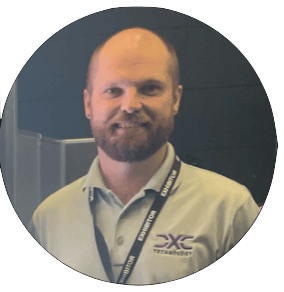
Tom Galpin-Swan
Tom Galpin-Swan is a Solution Architect, specialising in Artificial Intelligence and High-Performance Computing (HPC) for high secure environments. He leads the design of secure, data centric AI platforms and operating practices, aligning strategy, engineering standards, and delivery enabling clients to adopt AI responsibly and at pace.
A recognised innovator and mentor, Tom develops reusable approaches that make AI accessible in constrained settings, promote responsible adoption, and accelerate time to value. His HPC expertise spans architecture, optimisation, and operational excellence, bringing together heterogeneous compute, storage, and networking to unlock complex workloads with efficiency and scale.
Across DXC communities, Tom provides architectural leadership and guidance, shapes best practice and governance, contributes to training pathways, and communicates complex topics with clarity through talks and writing. He champions zero trust and secure by design principles, together with ethics and sustainability in AI. His work strengthens DXC’s internal capability and translates innovation into practical outcomes that create enduring value for DXC, its clients, and partners.

Andrew Trossman
Andrew Trossman is Chief Technologist, DXC Canada, bringing passion for the highest standards in our technical community servicing our clients. As a visionary technology leader Andrew pushes the teams to strive for excellence with continuous improvement and always learning.
Andrew’s career began with a series of high tech startups, some of which he cofounded. In 2000, he cofounded ThinkDynamics, an early developer of utility computing software which later became known as the cloud. IBM acquired the startup in 2003 and was recognized by winning the Canadian Venture Deal of the Year.
Prior to DXC Andrew was Vice President of Innovation and Distinguished Engineer at RBC, where he spearheaded transformative technological advancements, including natural language processing, LLMs and quantum safety. His leadership in transitioning to a modern Site Reliability Engineering (SRE) approach resulted in an 80% reduction in major incidents and a 25% increase in change throughput.
His expertise extends across various high-tech startups and established enterprises, consistently pushing the boundaries of technology. Andrew holds 16 US patents, underscoring his innovative approach and commitment to advancing technological solutions. Based in Toronto, Andrew enjoys kitesurfing, hydrofoiling, travel, photography, fine single malts, and creating homemade hot sauces in his spare time.
Get Directions to the event venue
Reach out at anytime we're here to help!